

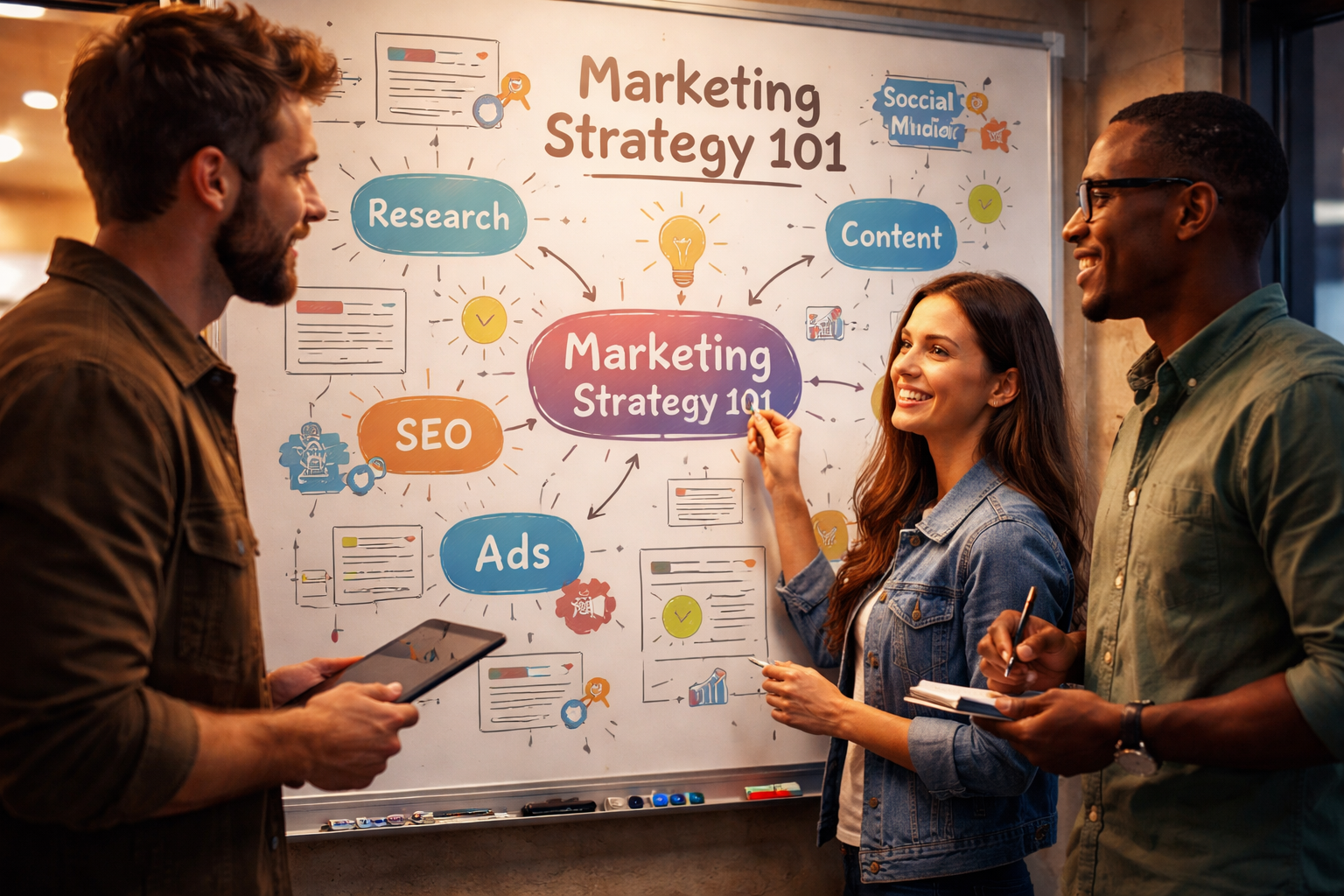
If you want your business to grow, hoping for the best isn’t a strategy. You need a clear, actionable roadmap to get your product or service in front of the right people. Welcome to Marketing Strategy 101.
Building a winning marketing plan doesn’t have to be overly complicated, but it does require intention. Whether you are launching a startup or trying to scale an existing business, a solid strategy bridges the gap between where you are and where you want to be. Here is a straightforward guide to building a marketing plan that actually converts.
1. Define Your Target Audience
You cannot sell to everyone. If your marketing targets “anyone,” it will resonate with no one. The foundation of Marketing Strategy 101 is understanding exactly who your ideal customer is.
- Identify demographics: Age, location, gender, and income.
- Understand psychographics: What are their pain points, desires, and hobbies?
- Create buyer personas: Build 2-3 fictional profiles of your ideal customers to keep your messaging focused.
2. Set Clear, Measurable Goals
What does a “winning plan” look like to you? Before spending a dime on ads or content, you need to define success using the SMART framework (Specific, Measurable, Achievable, Relevant, Time-bound).
- Bad goal: “I want more website traffic.”
- Good goal: “I want to increase website traffic by 20% by the end of Q3 to generate 50 new leads.”
3. Analyze the Competition
You need to know who you are up against. Look at three to five direct competitors and analyze their marketing efforts.
- What channels are they using successfully?
- What gaps are they leaving in the market?
- How can you differentiate your brand’s voice, offer, or customer service?
4. Choose the Right Marketing Channels
Do not try to be everywhere at once. Based on your target audience, pick the platforms where they actually spend their time.
- B2B Companies: LinkedIn, email marketing, and SEO-driven blog posts.
- Visual E-commerce: Instagram, TikTok, and Pinterest.
- Local Services: Google Business Profile and local Facebook groups. Master one or two channels before expanding into others.
5. Create Value-Driven Content
Conversion happens when trust is established. Stop just pitching your product and start solving your audience’s problems. Whether it’s through blog posts, short-form video, or an email newsletter, provide actionable value. Show your audience why they need you before asking them to buy.
6. Measure, Analyze, and Adjust
A marketing plan is a living document. Use tools like Google Analytics, social media insights, and CRM software to track your performance. If an ad isn’t converting, pause it. If a specific type of blog post drives massive traffic, write more of them. Constant optimization is the secret to a high-converting strategy.
Final Thoughts Mastering Marketing Strategy 101 comes down to knowing your audience, offering real value, and tracking your results. Take the time to build your foundation today, and the conversions will follow tomorrow.