

Introduction
Search Engine Optimization (SEO) has completely transformed. What used to be about ranking for one blue link is now about being cited as a trusted source by AI-powered search engines like Google AI Overviews, ChatGPT Search, and Perplexity.
In simple terms, SEO is the practice of optimizing your website and content so search engines (and now AI tools) can find, understand, and recommend your business to people searching for what you offer. Today, it’s less about “tricking” algorithms and more about building genuine authority so AI systems trust your information.
Why does this matter now? Because traffic to traditional websites is dropping. Major sites like HubSpot have seen 87% less organic traffic as AI search engines summarize answers directly. The old goal was to get the click. The new goal is to be the source—the one AI tools cite when answering user questions.
Key Features / How It Works
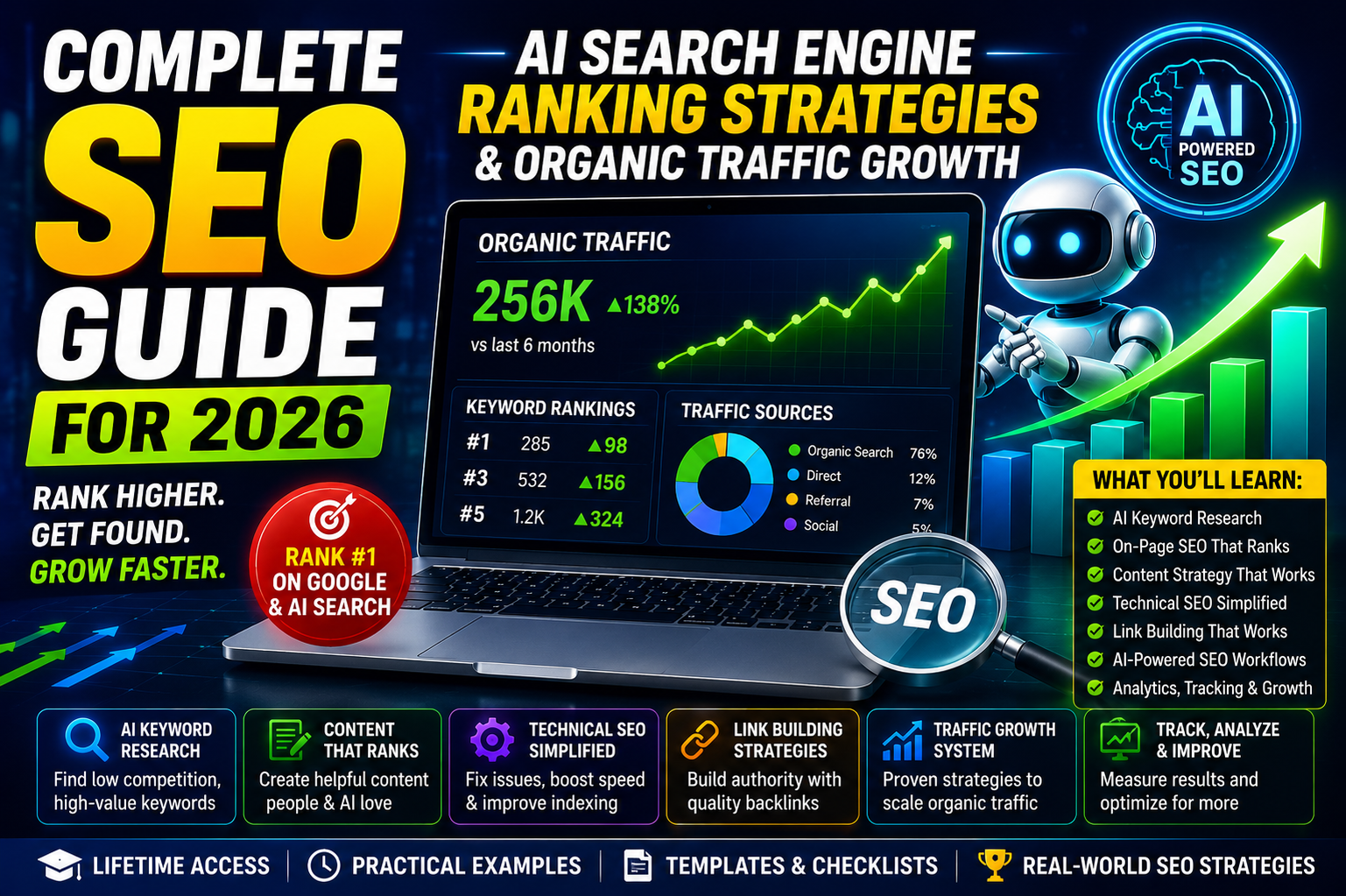
Modern SEO in 2026 revolves around several core components that work together:
- Keyword Research (Reimagined): Instead of just finding high-volume keywords, you now find questions people are asking. Tools like DataForSEO and Answer Socrates help you discover transactional keywords (with buying intent) and informational keywords (to build authority).
- AI-Optimized Content Creation: Using AI as a co-writer—not a replacement—you can create content that’s well-researched, cites authoritative sources, and matches your unique tone of voice. The goal is to add genuine value, not publish spam.
- Content Pillar & Satellite Strategy: Create one pillar page (your main service or topic) and multiple supporting blog posts that answer specific questions—all interlinked to build topical authority.
- Website Structure & Technical SEO: Plan your site’s architecture before building. Every service needs its own page. Proper metadata (title tags, H1s, meta descriptions), fast loading speed, and Schema markup (code that tells search engines exactly what your content means) are non-negotiable.
- Local SEO (if you have a physical presence): Optimize your Google Business Profile, get local citations (backlinks from local directories), and ensure your website clearly mentions your service areas.
- Backlink Building: Get other reputable websites to link to yours. Quality beats quantity—one relevant link from a trusted site is worth more than 100 spammy links. You can do this manually via platforms like Featured.com or outsource to trusted providers.
- Analytics & Data-Driven Decisions: Use Google Search Console (how Google sees your site) and Google Analytics (what visitors do on your site). Focus on actionable metrics—not vanity ones like “Domain Authority.”
- AI Automations: Automate repetitive tasks like posting Instagram images to Google Business Profile, turning blog posts into Google Business posts, and replying to positive reviews—saving hours every week.
What You Need to Get Started
Getting started with modern SEO doesn’t require a massive budget or a degree in computer science. Here’s what you’ll need:
- A Website (Essential): Built on platforms like WordPress, Webflow, or Shopify. You need control over pages, content, and technical settings.
- Basic Budget ($50–$500/month): This covers essential tools. Many have free tiers or pay-as-you-go options. Start small and scale up.
- SEO Tools (Beginner-Friendly):
- DataForSEO (pay-as-you-go, cost-effective)
- GTmetrix or Google PageSpeed Insights (free speed testing)
- SEO Wali (free browser extension for metadata checks)
- Answer Socrates (free question-discovery tool)
- Canva or Napkin.ai (for creating visual content)
- AI Tools:
- ChatGPT (for research, content drafting, and analysis)
- OpenRouter (one API key to access multiple AI models affordably)
- Make.com or Pabbly (automation platforms—free plans available)
- Time Commitment: Dedicate 3–5 hours per week consistently. SEO is a marathon, not a sprint. Results typically appear in 3–6 months but compound over time.
- Patience & Learning Mindset: You will experiment, fail, learn, and iterate. That’s part of the process. Start with one service or location and expand as you gain confidence.
Benefits & Challenges
✅ Benefits
- Sustainable, Free Traffic: Unlike paid ads, SEO traffic compounds. Once you rank, you keep getting visitors without paying per click.
- High-Intent Audience: People searching for your services are already looking for what you offer—they’re warmer leads than social media followers.
- Credibility & Authority: Ranking well builds trust. When AI systems cite you, it signals expertise to potential customers.
- Scalable: Once your content system works, you can expand to new services, locations, or topics efficiently.
- Cost-Effective Long-Term: The upfront investment in content and backlinks pays dividends for years.
⚠️ Challenges
- Results Take Time: Don’t expect overnight success. Most businesses see meaningful results after 3–6 months of consistent work.
- Competition: Popular niches are crowded. You need to out-strategize, not just out-spend.
- Constantly Evolving: Search engines and AI tools update frequently. What works today may shift tomorrow—you must stay informed.
- Technical Learning Curve: Understanding metadata, site structure, and speed optimization can feel overwhelming initially.
- Content Volume: To build authority, you need to produce valuable content consistently—not just once.
Best Strategies to Get Results
1. Start with Low-Hanging Fruit
Why it works: New websites can’t compete for high-difficulty keywords immediately. By targeting keywords with low competition but decent search volume, you build momentum.
How to execute: Use your SEO tool to find keywords with Keyword Difficulty under 20 and monthly search volume over 500. Create dedicated service pages or blog posts for these keywords. Over time, these pages accumulate authority and can start ranking for more competitive terms.
2. Master the Pillar & Satellite Model
Why it works: This structure signals to AI search engines that you’re a topical authority—not a one-hit-wonder. When you have dozens of interlinked, in-depth articles on related topics, AI tools recognize your expertise.
How to execute: Pick one main service (e.g., “Home Equity Loans”). Create a comprehensive pillar page covering everything about that service. Then write 10–20 satellite blog posts answering specific questions like “What’s the difference between HELOC and home equity loan?” or “Are home equity agreements a good idea?” Interlink everything back to the pillar.
3. Leverage AI as Your Co-Writer, Not Your Replacement
Why it works: AI can produce the first draft of a blog post in seconds, saving hours of research and structuring. But the value-adding—personal stories, unique insights, specific data—still comes from you.
How to execute: Feed AI your tone-of-voice document (write a sample post in your style and have AI distill it), a negative keywords list (words/phrases you don’t want to use), and the topic. Have AI ask clarifying questions before writing. Then review, add your experience, insert relevant visuals, and link internally.
Pro tip: Use Napkin.ai to create simple, engaging visuals from your text—AI search engines love visual elements that make content easier to understand.
Common Mistakes & Safety Tips
🚫 Mistakes to Avoid
- Ignoring Website Structure: Jumping straight into building without planning pages, URLs, and internal links. This creates orphaned pages and confuses search engines.
- Publishing Low-Quality AI Content: AI is a tool, not a magic wand. Publishing regurgitated, unedited content signals “low value” to search engines and users. Always add unique insights and personal experience.
- Chasing Vanity Metrics: Obsessing over “Domain Authority” or “traffic volume” while ignoring whether visitors convert. Traffic without leads is just noise.
- Neglecting Local SEO Fundamentals: Not claiming your Google Business Profile, skipping local directories, or having inconsistent business information across platforms.
- Buying Spammy Backlinks: Cheap link packages from irrelevant or low-quality sites can get you penalized. One great link beats 100 garbage links every time.
✅ Safety & Ethical Tips
- Google Does NOT Penalize AI Content: They penalize low-quality content, regardless of who or what created it. Focus on adding value, citing sources, and being helpful.
- Always Cite Your Sources: Especially in “Your Money or Your Life” (YMYL) niches like finance, health, or legal services. AI search engines trust content backed by reputable sources.
- Keep Your Google Business Profile Active: Treat it like a social media account. Upload photos regularly, post updates weekly, and respond to reviews promptly. Aim for 100+ images—data shows it significantly increases calls, direction requests, and website visits.
- Automate Responsibly: Automate positive review replies and content sharing—but manually handle negative reviews. Human empathy can’t be automated without risk.
- Stay Skeptical of “Easy Money” Schemes: No SEO tool guarantees rank #1. Anyone promising overnight results is selling a dream, not a solution.
Conclusion
SEO in 2026 is alive, evolving, and more powerful than ever. It’s no longer about gaming algorithms—it’s about becoming the trusted source that AI search engines want to cite. The game has changed from “being the destination” to “being the source.”
You don’t need to be a tech wizard or have a massive budget. Start with one service, one location, and one content pillar. Master the fundamentals: keyword research, website structure, high-quality content, local SEO, and backlinks. Use AI as your co-pilot, not your replacement. Track what matters—not vanity metrics—and take action on the data.
The businesses that win in this new era are those that embrace the shift. They create valuable, well-structured content. They engage their local community. They automate smartly and ethically. And they persist.
Your journey starts today. Pick one strategy from this guide and implement it this week. Then build from there. The next wave of organic traffic is waiting—and you’ve got everything you need to catch it.