

Introduction
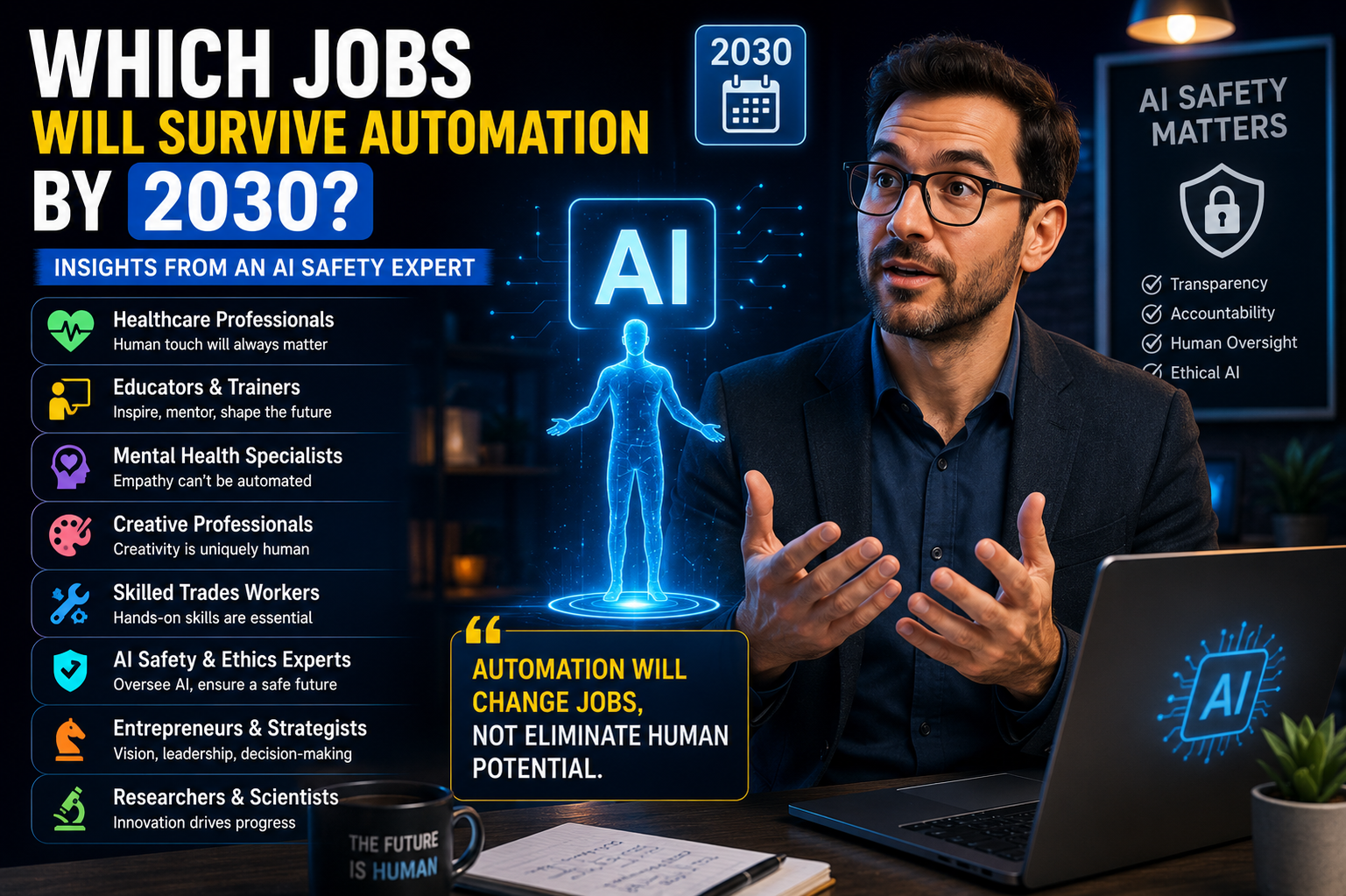
AI safety researcher Dr. Roman Yampolskiy — a computer science professor who has spent close to two decades studying how artificial intelligence could go wrong — recently shared some sobering predictions about the future of work.
His core argument: as AI systems approach and eventually surpass human-level intelligence across most domains, the traditional advice of “just retrain for a new job” may stop working entirely. In his view, there may only be a small number of job categories that stay meaningfully human — not because AI can’t technically do them, but because people specifically prefer another human to do them.
This matters for anyone thinking about their career, income, or online business plans in the years ahead. Even if you don’t agree with every prediction, understanding this perspective can help you make smarter, more resilient decisions about where to invest your time, skills, and money.
Important context: these are one expert’s predictions, not certainties. Timelines around AI are notoriously difficult to forecast, and reasonable experts disagree. Treat this as food for thought, not a guarantee of what will happen.
Key Features / How It Works
Here’s a breakdown of the core ideas from this discussion:
- The “retrain for a new job” model may be breaking down. Historically, when technology automated one job, people moved to a different one. Yampolskiy argues advanced AI is different because it can potentially learn any new job about as fast as it learns the current one — leaving fewer safe landing spots.
- Predicted timeline is short. Based on prediction markets and statements from AI lab leaders, Yampolskiy expects artificial general intelligence (AGI) — AI that matches human ability across most domains — as early as 2027, with humanoid robots capable of physical labor following within roughly five years after that.
- The jobs most likely to remain aren’t defined by difficulty — they’re defined by human preference. Rather than naming a fixed list of “safe” careers, the argument is that a small slice of work will stay human simply because customers want a human involved — similar to how some people today pay more for handmade or “man-made” goods over mass-produced alternatives.
- Examples of preference-based work mentioned include: a wealthy client choosing a human accountant out of habit or trust, older generations preferring traditional service providers, and niche markets that value authenticity or human connection over efficiency.
- Physical labor isn’t a safe fallback either. Humanoid robots are being developed rapidly, meaning even trades and manual work may eventually face automation pressure, not just desk jobs.
- The bigger economic shift is about income and purpose, not just job titles. If large-scale automation happens quickly, questions about who gets paid, how, and what people do with their time become just as important as which specific job survives.
What You Need to Get Started
You don’t need to have all of this figured out today, but here’s how to start preparing in a grounded, practical way:
- A habit of tracking AI developments in your field. You don’t need to be a technical expert — just stay aware of how AI tools are changing your specific industry.
- Willingness to build skills that involve genuine human connection, trust, or judgment. These tend to be more resistant to full automation, at least in the near term.
- Multiple income streams, where possible. Diversifying how you earn — a mix of a primary job, freelance work, or an online business — reduces the risk of being fully dependent on one role that could be disrupted.
- Basic financial literacy and an emergency fund. Regardless of how AI timelines play out, having savings and financial flexibility gives you room to adapt if your industry changes faster than expected.
- An open, curious mindset rather than denial or panic. Yampolskiy specifically points out that dismissing this topic outright (“no AI could ever do my job”) is a common but risky reaction.
Benefits & Challenges
The Upside of Paying Attention Now
- Early awareness creates a head start. People who start adapting their skills and income strategy now have more time to adjust than those who wait.
- AI tools can boost your own productivity today. Regardless of long-term predictions, learning to use AI well can make you more valuable and efficient right now.
- New opportunities are emerging alongside the disruption. Fields like AI-assisted content creation, automation consulting, and AI-adjacent freelance work are growing even as older roles shift.
The Honest Challenges
- The predictions in this conversation are aggressive and disputed. Not every AI researcher agrees with timelines this short — treat them as one expert’s view, not a settled fact.
- There’s no guaranteed “safe” career path. Unlike past waves of automation, this argument suggests there may not be a clear list of jobs to retrain into.
- Emotional and financial stress is real. Thinking seriously about large-scale job disruption can feel overwhelming, especially if your income depends on a role that could be affected.
Best Strategies to Get Results
- Build a skill stack, not a single skill. Combining a few complementary abilities (for example, industry knowledge plus AI tool fluency plus communication skills) makes you harder to fully replace than relying on one narrow specialty.
- Lean into work that depends on trust and relationships. Since the argument here is that human preference — not raw capability — will decide which jobs survive longest, focus on building genuine reputation, community, and long-term client relationships rather than purely transactional work.
- Treat your finances as part of your career resilience plan. Building savings, reducing debt, and diversifying income isn’t just good financial advice generally — it directly increases your ability to adapt if your industry changes faster than expected.
Common Mistakes & Safety Tips
- Don’t panic-quit your job or make major financial decisions based on a single prediction. Timelines discussed here are speculative, even by the expert’s own admission.
- Avoid “doomscrolling” AI content without taking any constructive action. Awareness without a plan tends to just create anxiety.
- Be skeptical of anyone selling a guaranteed “AI-proof” career course or investment. No one can guarantee immunity from technological change — treat big promises with caution.
- Don’t ignore the topic entirely either. Dismissing AI’s impact outright (“this could never affect my job”) is flagged in this conversation as a common but risky blind spot.
- Diversify rather than betting everything on one skill, employer, or income stream. This is a timeless piece of financial and career advice that becomes even more relevant during periods of rapid technological change.
If you want a practical starting point for building additional income streams alongside your main job, resources like Coursera or LinkedIn Learning are solid, low-cost ways to build in-demand skills such as AI tool literacy without falling for expensive “guru” programs.
Conclusion
Whether or not every prediction in this conversation comes true, the underlying message is worth taking seriously: relying on a single skill or job title as your only source of income is increasingly risky.
The most resilient path forward isn’t panic — it’s staying informed, diversifying your skills and income, and building work that leans on genuinely human strengths like trust, judgment, and relationships.
You don’t need to have it all figured out today. Start building flexibility into your career and finances now, and you’ll be far better positioned no matter how the next few years unfold.
Disclaimer: This article summarizes one expert’s opinions and predictions for informational purposes only. It is not financial, career, or investment advice. AI timelines are uncertain and widely debated among experts — consider multiple sources before making major life decisions.