

Introduction
Social media platforms aren’t neutral tools — they’re engineered products, built by teams who specifically study how to hold your attention as long as possible. Understanding this isn’t about fear-mongering; it’s about giving you the knowledge to use these platforms intentionally, especially if you’re building an online business, brand, or income stream that depends on them.
This matters for anyone exploring digital marketing, content creation, or online entrepreneurship. If your livelihood involves platforms like Instagram, TikTok, or Facebook, understanding how they’re designed to work on your brain isn’t optional — it’s a genuine professional and personal skill.
This guide breaks down the research and mechanics behind social media’s addictive design, and gives you practical, non-judgmental strategies to protect your focus, wellbeing, and productivity while still using these platforms effectively for work or business.
Key Features / How It Works
Here’s what the research and industry insiders describe about how these platforms are designed:
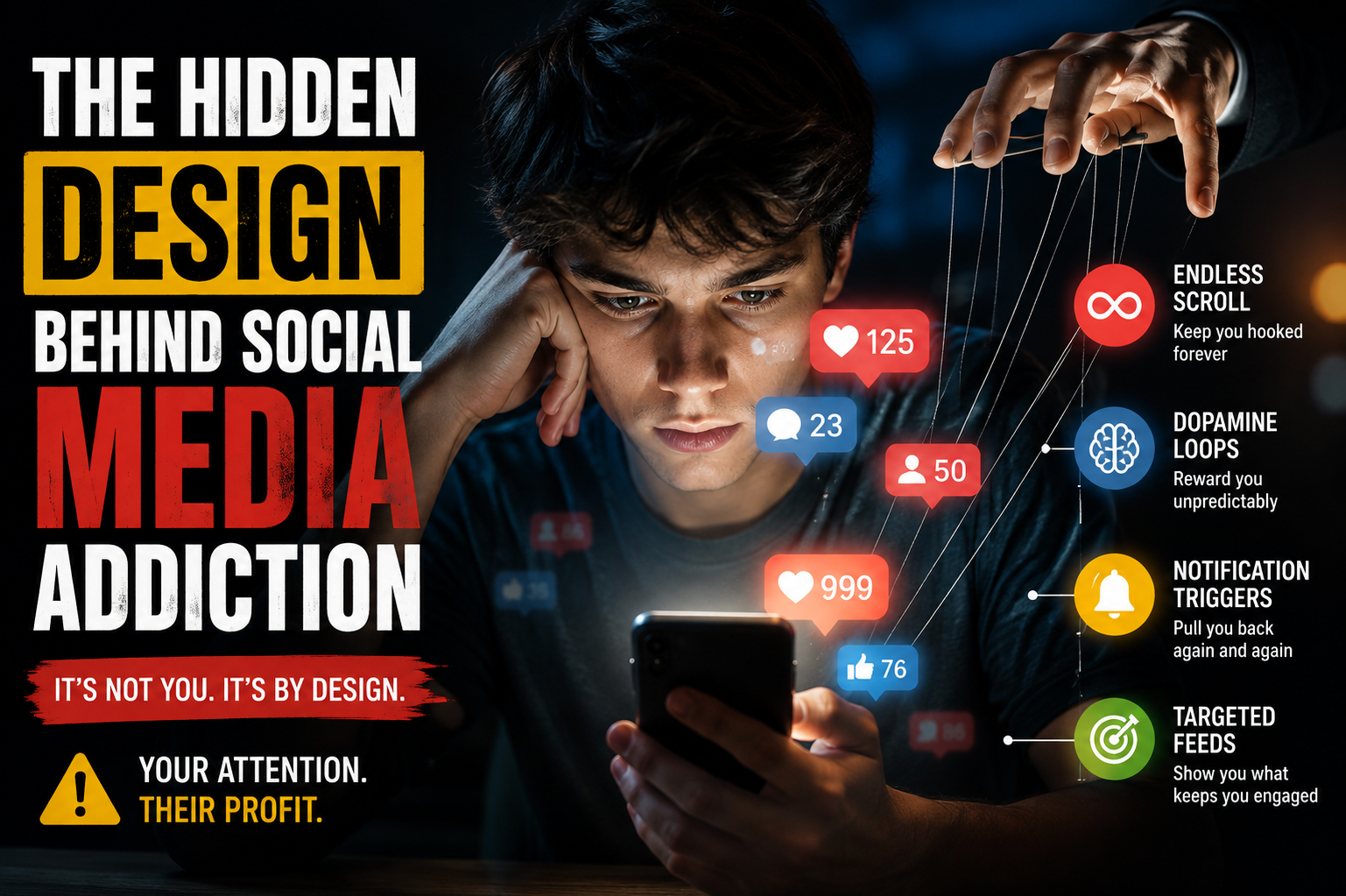
- Variable reward systems drive engagement. Much like a slot machine, not knowing whether your next scroll, like, or notification will be rewarding is what keeps people checking compulsively — researchers have referred to this as “the magic of maybe.”
- Notifications are often strategically timed, not random. Some features are designed to resurface content (like a new profile photo) at moments when a person is more emotionally invested in how others perceive them, increasing the chance they’ll return to the app.
- Fragmented attention has real cognitive costs. Research suggests that regularly breaking your focus throughout the day to check a feed can reduce your overall capacity for sustained concentration over time.
- Social comparison is built into the format. Feeds are generally filled with curated highlights of other people’s lives, and research links heavy social media use with increased feelings of loneliness, inadequacy, and lower self-esteem.
- The attention economy rewards engagement, not wellbeing. Because platforms often generate revenue based on how much time and attention users spend on them, design choices tend to optimize for usage duration rather than user satisfaction or mental health.
- These effects aren’t accidental — they stem from deliberate design principles, sometimes described as borrowing psychological techniques from other engagement-driven industries, like casino gaming design.
What You Need to Get Started
You don’t need to quit social media entirely to build a healthier relationship with it — especially if you use it professionally. Here’s what actually helps:
- Self-awareness about your own usage patterns. Before changing anything, it helps to genuinely notice when and why you’re reaching for your phone — boredom, anxiety, habit, or an actual purpose.
- A clear sense of what you’re using social media for. If you’re using it for business or marketing, define specific goals (posting, engaging with a specific audience, research) rather than open-ended scrolling.
- Screen time tracking tools. Most smartphones now include built-in screen time and app-limit features, which can help you see your actual usage patterns rather than relying on guesswork.
- Boundaries around notifications. Turning off non-essential notifications is one of the simplest ways to reduce the “variable reward” triggers that pull your attention throughout the day.
- A replacement activity or goal. Cutting back on passive scrolling works best when it’s paired with something meaningful to redirect that time and energy toward — a project, hobby, or relationship.
Benefits & Challenges
The Upside of Understanding This
- Better focus and productivity. Reducing fragmented attention can improve your ability to do deep, meaningful work — which is especially valuable if you run an online business or create content professionally.
- Healthier long-term relationship with these platforms. Understanding the mechanics behind the design helps you use these tools intentionally, rather than being used by them.
- A genuine professional edge. If you work in digital marketing or content creation, understanding attention design isn’t just protective — it also helps you create more ethical, effective content strategies.
The Honest Challenges
- These platforms are genuinely difficult to use in moderation by design. This isn’t a personal failing — the systems are built by teams specifically working to maximize engagement, so it’s a real, ongoing effort to manage your usage.
- Complete avoidance isn’t realistic for most online entrepreneurs. If your income depends on these platforms, “just quit” isn’t practical advice — the goal is intentional use, not elimination.
- Social comparison is a natural human tendency, so simply being aware of curated content isn’t always enough to fully prevent feelings of inadequacy — ongoing practice and self-compassion matter here too.
Best Strategies to Get Results
- Shift your point of comparison from others to yourself. Instead of comparing your life or business progress to someone else’s curated highlight reel, track your own progress against your past self. This is described in the research as both more accurate and more genuinely motivating.
- Set specific times and purposes for platform use, especially for business. If you’re using social media for marketing or income, define clear sessions with a specific goal (posting, responding to messages, research) rather than open-ended browsing, which is where most compulsive use tends to happen.
- Build “friction” into your habits. Turning off notifications, moving apps off your home screen, or using built-in screen-time limits creates small pauses that interrupt automatic, habitual checking — making your usage more of a conscious choice.
Common Mistakes & Safety Tips
- Don’t confuse awareness with a quick fix. Simply knowing these platforms are designed to be addictive doesn’t automatically change your habits — real change usually requires consistent, small adjustments over time.
- Avoid all-or-nothing thinking. If you’re building an online business, complete avoidance often isn’t realistic or necessary — intentional, purposeful use is a more sustainable goal for most people.
- Watch for burnout if you’re a content creator. The same design features that make platforms addictive for users can also pull creators into overworking, chasing metrics, or tying self-worth to engagement numbers — this deserves the same attention as usage habits.
- Be cautious with productivity or “detox” apps that make big promises. Simple, free, built-in tools (like your phone’s native screen-time settings) are often just as effective as paid apps claiming to “cure” social media addiction.
- If you notice this topic resonating personally — like feeling persistently low, anxious, or isolated in connection with social media use — that’s worth taking seriously and discussing with a doctor or mental health professional, rather than trying to self-diagnose or manage it alone.
If you want a genuinely useful, free starting point, most smartphones’ built-in Screen Time (iOS) or Digital Wellbeing (Android) tools are a solid, no-cost way to start tracking and adjusting your usage before looking into any paid apps.
Conclusion
Social media platforms are built by talented people using real behavioral science — and that’s exactly why so many of us struggle to use them in moderation. Understanding the mechanics behind the design is the first step toward reclaiming your attention, whether you’re a casual user or someone building an online business through these very platforms.
You don’t have to quit social media to benefit from this awareness. Set clear intentions, build small friction into your habits, and measure yourself against your own progress instead of someone else’s highlight reel.
A note on this topic: if concerns about mental health, low mood, or feelings of isolation connected to social media use are affecting you personally, please consider reaching out to a doctor, therapist, or a trusted support resource — this article is educational and general in nature, not a substitute for professional support.