

Introduction
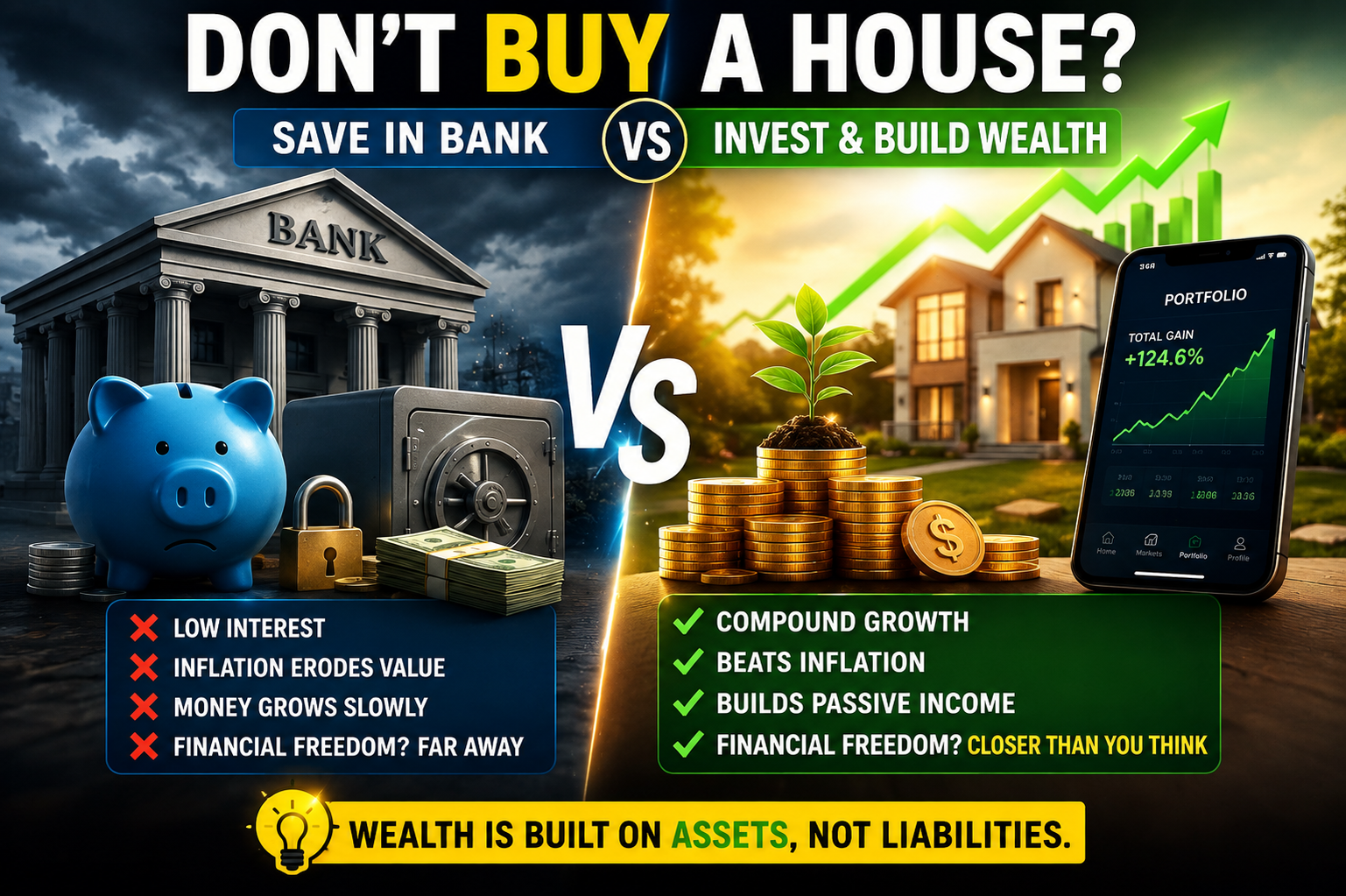
A viral finance panel recently sparked debate online with a bold claim: buying a house isn’t the wealth-building move you think it is, and parking your savings in a bank account is quietly making you poorer every single day.
It sounds extreme. But the logic behind it is worth understanding, especially if you’re trying to build wealth, generate passive income, or figure out how to make your money work for you instead of the other way around.
At the core of this idea is a simple truth: money that sits still loses value. Inflation erodes the purchasing power of cash over time, so “safe” savings can actually be a slow, guaranteed loss. Meanwhile, assets like index funds, real estate investments, and even cryptocurrency have historically outpaced that erosion — but each comes with its own trade-offs, risks, and learning curve.
This guide breaks down what this “don’t just save, invest” philosophy really means, how it works in practice, and how you can apply it without taking on more risk than you’re comfortable with.
Key Features / How It Works
The core argument boils down to a few connected ideas:
- Cash loses value over time. When more money is printed or circulated in an economy, each unit of that currency buys less. This is why a bank account paying near-zero interest can leave you with less real purchasing power a year from now, even though the number in your account hasn’t dropped.
- A home is an expense, not an investment — unless you’re renting it out. A primary residence you live in doesn’t generate cash flow. It can grow in paper value, but that “equity” is invisible until you sell, and selling means you need somewhere else to live anyway.
- Passive investing tends to beat active investing for most people. Long-term, diversified index funds (like those tracking the S&P 500) have historically outperformed the majority of people who try to pick individual stocks or time the market.
- Higher-growth assets (like technology-focused funds or cryptocurrency) can outperform traditional investments — but with much bigger swings. More potential upside generally means more potential downside, and the ability to sit through a 50–70% drop without panic-selling is what separates long-term winners from long-term losers.
- “Passive income” usually isn’t passive at first. Rental property, dividend investing, and side businesses all require real upfront effort, research, and mistakes before they become low-maintenance.
- Your income matters more than your coffee budget. Cutting small expenses helps, but increasing your earning power — through new skills, side income, or career growth — tends to move the needle much faster.
What You Need to Get Started
You don’t need to be wealthy already to start applying these principles. Here’s a realistic starting toolkit:
- A basic emergency fund. Before investing aggressively, most financial experts agree you need a small cash cushion (3–6 months of expenses) for genuine emergencies.
- A brokerage account. Free or low-cost platforms let you buy index funds, ETFs, or individual stocks with as little as a few dollars.
- Time and consistency, not a huge starting balance. Investing smaller amounts regularly (a strategy known as dollar-cost averaging) matters far more than trying to invest a large lump sum perfectly.
- A willingness to track your spending. Knowing exactly what you earn and spend each month is the foundation everything else is built on.
- Basic financial literacy. You don’t need a finance degree, but understanding concepts like compound interest, inflation, and diversification will help you make calmer decisions when markets get volatile.
- A long time horizon. These strategies are built around years and decades, not days and weeks.
Benefits & Challenges
The Upside
- Compounding works in your favor over decades. Consistently investing even modest amounts over 20–30 years can realistically grow into a substantial retirement fund, thanks to compound growth.
- You gain control. Instead of hoping a bank account or a single home purchase secures your future, you’re actively building multiple income streams and assets.
- Flexibility. Renting and investing the difference can offer more freedom to relocate for jobs or opportunities compared to being tied to a mortgage.
The Honest Challenges
- Volatility is emotionally hard. Watching an investment drop 30–70% in value tests even experienced investors. Panic-selling during downturns is one of the most common ways people lose money.
- Higher-return assets carry higher risk. Cryptocurrency, growth stocks, and leveraged investments can generate strong returns, but they can also lose significant value quickly — and are not suitable for money you can’t afford to lose.
- Real estate and rental income require real work. Property management, tenants, repairs, and vacancies mean “passive” rental income often starts out anything but passive.
- Debt makes everything harder. High-interest debt (like credit cards) can outpace almost any investment return, so paying that down often has to come first.
3 Best Strategies to Get Results
- Automate your investing. Set up automatic monthly contributions to a diversified fund (like an S&P 500 index fund) so you’re investing consistently regardless of market mood. This removes emotional decision-making and takes advantage of dollar-cost averaging.
- Diversify instead of going all-in on one asset. Spreading investments across index funds, some individual assets, and — if you’re comfortable with the risk — a small allocation to higher-volatility assets like crypto, helps balance growth potential with stability. A common approach is keeping the bulk of a portfolio in low-cost, diversified funds and only a small percentage in speculative bets.
- Solve for income before cutting every small expense. Building a new skill, freelancing, or picking up a side project can often increase your earnings faster than trimming your grocery bill ever could — and that extra income is what fuels your investing in the first place.
Common Mistakes & Safety Tips
- Don’t invest money you might need in the next 1–3 years. Short-term needs belong in savings, not in the stock market or crypto.
- Avoid borrowing against volatile assets unless you fully understand the risk. Taking a loan against crypto or stocks can lead to forced liquidation if prices drop suddenly — this has wiped out portfolios before.
- Watch out for “get rich quick” passive income claims. If a course, coach, or social media post promises easy money with no effort or risk, treat it as a red flag.
- Check the fees on your retirement accounts. Many people don’t know what they’re paying in 401(k) or investment management fees — and those fees quietly eat into long-term returns.
- Don’t treat your home purchase as a wealth strategy. It’s fine — even wise — to buy a home when you’re financially ready, but go in expecting it to be a lifestyle decision first and a financial one second.
- Never chase past performance blindly. Just because an asset performed exceptionally well historically doesn’t guarantee it will repeat that performance.
If you’re new to any of this, a reputable resource like Investopedia is a solid free starting point for building your financial vocabulary before you put real money on the line.
Conclusion
The bigger idea behind “don’t just save, invest” isn’t that saving is bad or that buying a house is always a mistake — it’s that letting money sit idle has a real, measurable cost, and building wealth usually requires a mix of increasing your income, investing consistently, and staying disciplined through market ups and downs.
You don’t need to have it all figured out today. Start small, stay consistent, keep learning, and let time and compounding do the heavy lifting.
Disclaimer: This article is for educational purposes only and is not financial advice. Investing involves risk, including the potential loss of principal. Consider speaking with a licensed financial advisor before making significant financial decisions.